


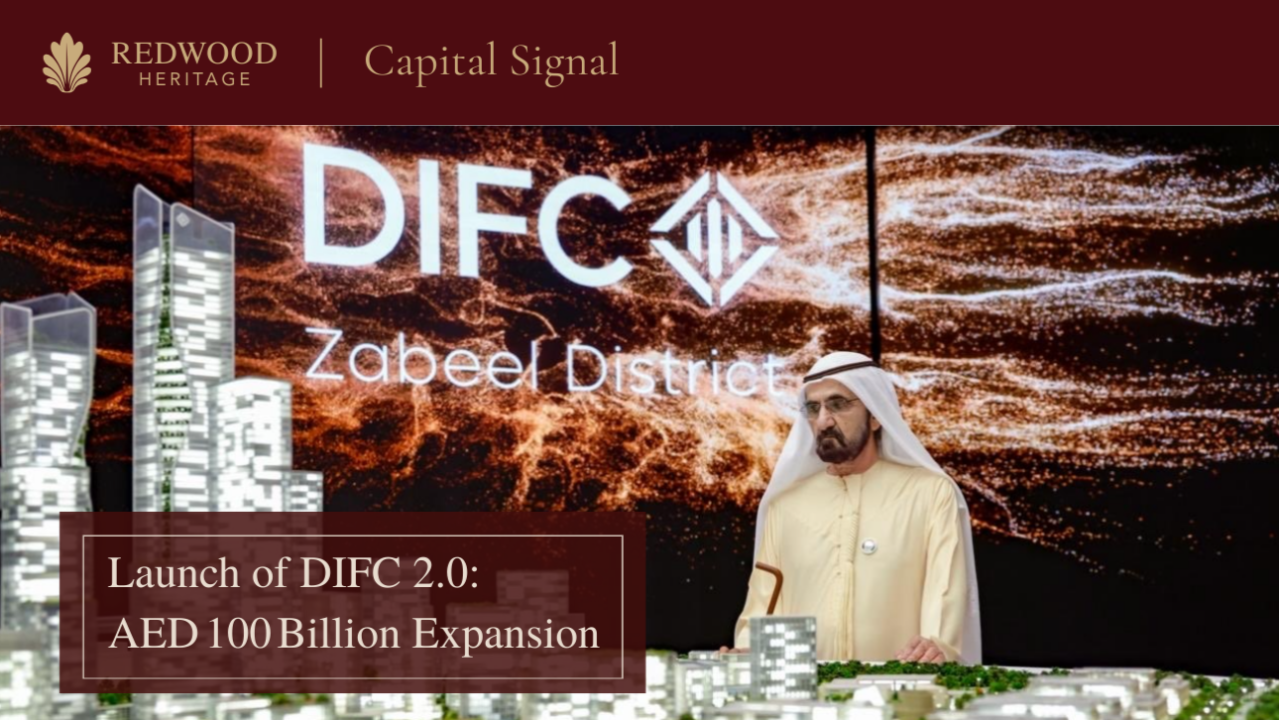
Landmark Expansion of DIFC to Strengthen Dubai’s Global Financial Position
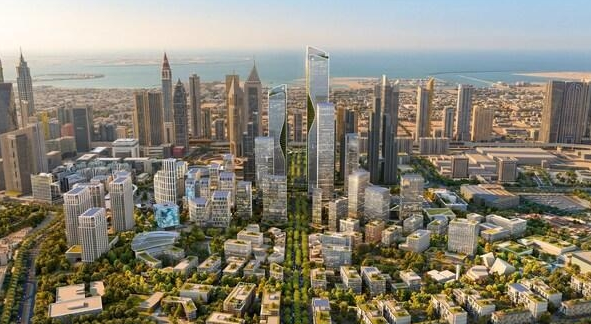
On 27 January 2026, His Highness Sheikh Mohammed bin Rashid Al Maktoum, Vice President and Prime Minister of the UAE and Ruler of Dubai, launched the landmark AED 100 billion expansion of the Dubai International Financial Centre (DIFC). The new DIFC Zabeel District marks the most significant demand-led growth initiative in the region’s financial services sector.
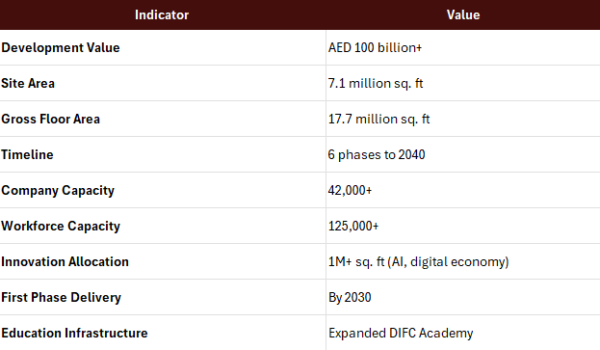
With a gross floor area of 17.7 million sq. ft across 7.1 million sq. ft of land, the district will increase DIFC’s total built-up area to over 31 million sq. ft. Upon completion, DIFC will be able to host over 42,000 companies and more than 125,000 professionals.
This expansion aligns directly with the Dubai Economic Agenda (D33), reinforcing Dubai’s strategic goal to become one of the world’s top four global financial hubs. It also reflects Dubai’s enduring commitment to long-term planning, sovereign investment in infrastructure, and positioning as a centre of gravity for global capital.
DIFC 2.0 at a Glance
Vision and Strategic Objectives
Speaking at the launch, HH Sheikh Mohammed stated:
“In Dubai, we do not wait for the future. We build it. We shape our economic landscape with vision, planning, and execution.”
The DIFC Zabeel District reflects this ambition. It is designed to:
- Expand institutional capacity for the financial, legal, and innovation sectors
- Enable new regulatory and structural frameworks for AI, digital finance, and next-generation services
- Create an integrated platform where capital, innovation, talent, and culture converge
The district supports the goals of the D33 Agenda, including doubling the size of Dubai’s economy and enhancing its status as a global centre for financial services, technology, and enterprise formation. It affirms Dubai’s role not only as a financial hub, but as a global city capable of hosting and governing the next cycle of economic transformation.
District Features and Development Scope
The new DIFC Zabeel District will feature:
- Over 1 million sq. ft dedicated to innovation and future economy sectors, including artificial intelligence, digital assets, and climate finance
- Expanded DIFC Academy facilities to accommodate thousands of regional and global learners annually
- Integrated commercial, residential, lifestyle, and cultural zones to support tenancy cycles, institutional clustering, and executive relocation
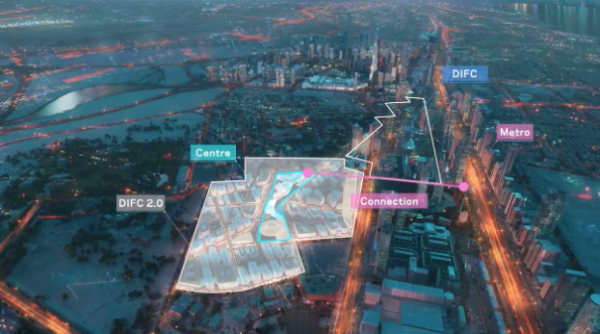
- Walkable, transit-connected urban design that integrates with the existing Gate District and core DIFC infrastructure
Zabeel will be physically connected to the current DIFC zone via pedestrian and vehicular infrastructure, ensuring seamless movement, legal continuity, and operational integration. The total ecosystem will represent one of the world’s most advanced and concentrated financial environments.
Development will occur in six phases. The first buildings are expected to come online by 2030, with full project delivery scheduled by 2040.
Institutional Growth and Economic Alignment
The DIFC Zabeel expansion arrives at a time of record performance. As of H1 2025, DIFC had achieved its best financial results to date, hosting over 6,000 firms and managing over USD 250 billion in assets. Innovation entities now exceed 1,500, and demand for regulated, strategically located workspace continues to outpace supply.
This new district is a response to that demand. It also reflects the broader macroeconomic thesis: that Dubai will lead in regulated innovation, capital structuring, and cross-border talent aggregation for the region and beyond.
The district also introduces a new spatial and strategic logic. Institutions will no longer simply lease space – they will plug into an ecosystem. Education, regulatory access, capital deployment, and digital infrastructure will operate in sync. DIFC is evolving from a zone into a platform.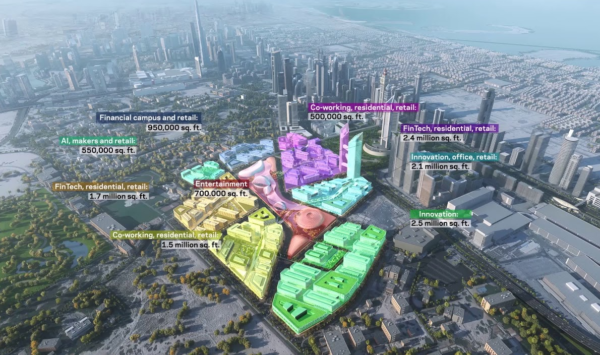
Redwood Heritage Commentary
Redwood Heritage welcomes the launch of DIFC Zabeel as a generational statement of vision, scale, and sovereign confidence.
Our role is not to speculate. It is to interpret, clarify, and communicate the long-term relevance of such milestones to our clients and counterparts. What matters now is not how quickly one can access the district, but how thoughtfully one positions in relation to it.
We see DIFC Zabeel as a future stage for institutional concentration, regulatory certainty, and capital governance – not just in the UAE, but across the region.
This is a moment for message discipline:
- A reminder that Dubai builds to govern, not react
- A signal that infrastructure is once again the medium of economic policy
- A prompt to engage thoughtfully, with timelines and structures that reflect the scale of what is being built
Redwood will continue to publish, brief, and support client strategy based on signals like this one. Our commitment is to accuracy, foresight, and trust.
Conclusion
DIFC 2.0 is not yet another announcement. It is a forward deployment of governance, capital, and institutional infrastructure. It scales a working system, underwrites the next generation of tenancy, and confirms Dubai’s role in the future of global financial services.
For capital seeking strategic clarity, sovereign alignment, and jurisdictional integrity, this is the moment to prepare.
Redwood Heritage Real Estate will continue to guide clients with discretion, discipline, and deep knowledge of the ecosystem.
This is not a trend. It is the foundation of what comes next.

