


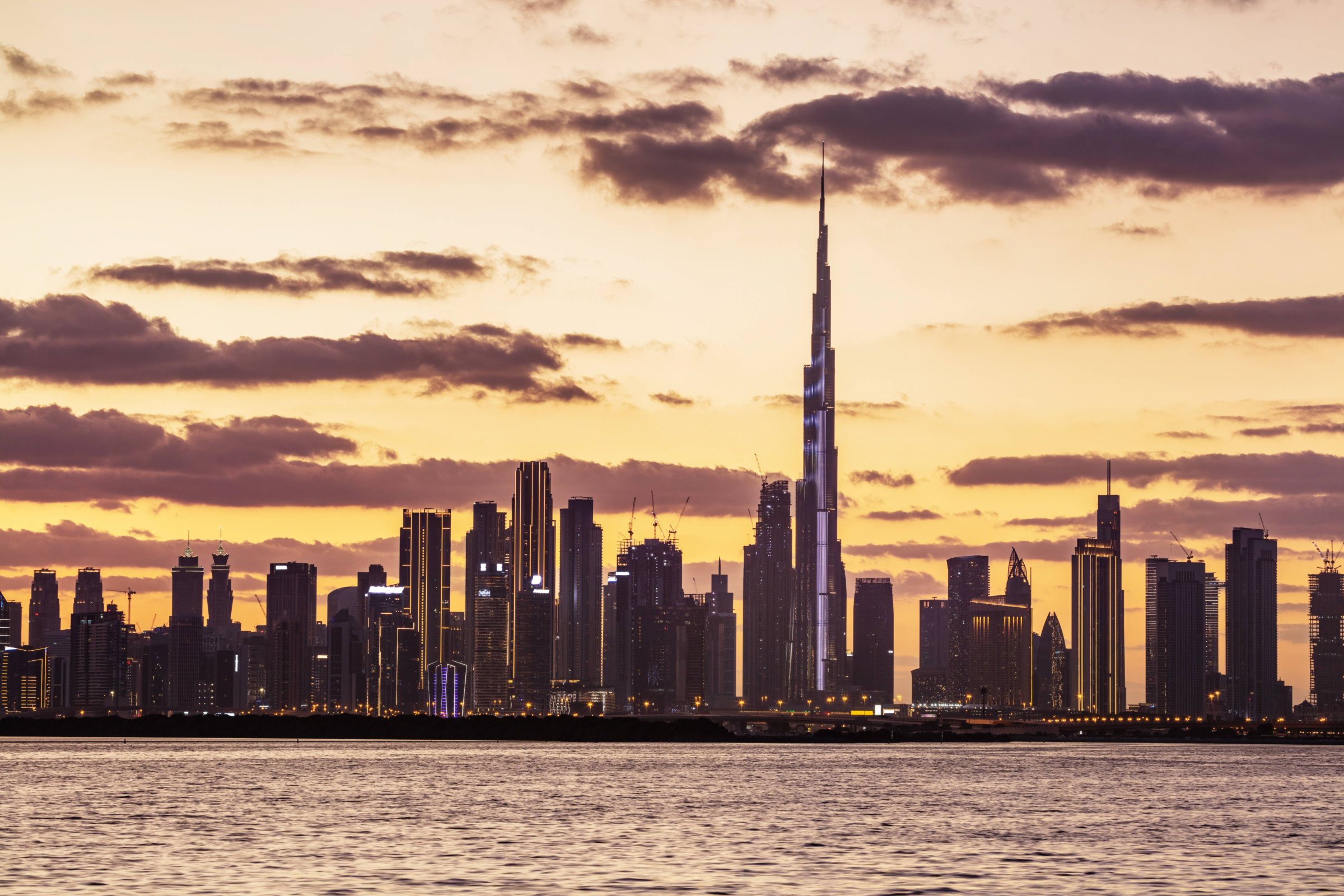
- Dubai’s cycle is underpinned by structural demand, real occupancy and maturing regulation, but it carries an undercurrent: the rise of small scale developers.
- More than 325 residential projects, nearly 88,000 units, were launched in the first half of 2025 alone (Cavendish Maxwell).
- Many new entrants are light on capital and rely on pre-sales. Completion delays may begin to appear in 2026.
- Capital is shifting towards completed or near completion units, proven developers and stable rental yields. Due diligence has never mattered more.
1. The Big Picture
Dubai’s real estate market continues to impress. In 2025, our transaction volumes have surpassed previous records, off-plan sales dominate and global investor interest remains very strong. On the surface, it is a golden period: over 120,000 apartment sales projected by year end, with prices holding steady despite rising supply.
Having experienced the volatility of 2008 first hand while leading CBRE Middle East’s Investment division, I recognise the signs of a very different cycle today. This expansion is not built on speculation alone. It is underpinned by structural demand, genuine end-user occupancy and a maturing regulatory environment. Vacancy rates are historically low, rental yields are firm and the buyer profile has shifted towards long term residents and globally mobile professionals.
This momentum, however, carries an undercurrent that receives little attention: the unchecked rise of small scale developers, many of them entering the market for the first time. Alongside the boom in sales, we are witnessing an exponential boom in builders.
It raises a central question. In a market crowded with new names and promises, who will still be standing at the end of the cycle?
2. The Developer Boom
According to Cavendish Maxwell, more than 325 residential projects were launched in the first half of 2025 alone, representing nearly 88,000 new units from a mix of established names and a rapidly growing list of new entrants.
Flexible payment plans, strong demand and global appetite for Dubai’s off-plan market have opened the field. Smaller participants, often without the capital base or operational depth of established developers, are moving quickly to stake their claim. New names appear almost weekly on Sheikh Zayed Road’s very expensive billboards. Some promise luxury, others emphasise innovation, and a few mistake Instagram popularity for development expertise, relying on celebrity endorsements as their principal assurance of delivery.
The marketing is polished and the renderings are impressive. With off-plan transactions accounting for the majority of sales, these new entrants are increasingly shaping the skyline. Ambition alone, however, does not guarantee delivery, and volume without resilience can lead to fragility.
3. Cracks in the Foundation
The boom conceals a mounting fragility, and also an opportunity to raise standards.
Many new developers are light on capital. Some market with confidence but without an established track record. Others rely on pre-sales to fund construction, which introduces sensitivity in a market as dynamic as Dubai’s.
The surge in launches is placing pressure on delivery capacity, construction timelines and investor expectations. Completion delays may begin to appear in 2026, and with them, questions about consistency and follow-through.
There are also legitimate concerns about build quality and after-sales service. As speed becomes a differentiator, execution discipline can vary. For investors, this translates into practical considerations, from handover timing to post-possession support.
In a market evolving this quickly, success depends on more than sales. It depends on remaining financially sound, operationally reliable and trusted by the families who invest here.
4. Why Not Everyone Will Make It
There is a natural limit to expansion, and Dubai’s developer ecosystem is approaching it.
Too many projects are competing on too few differentiators. As more units enter the market, margins compress, and the average buyer becomes more cautious, more focused on yield and less forgiving.
Small developers face four core challenges:
- Limited access to long-term capital
- Weak delivery infrastructure
- Lack of brand equity
- Inability to compete on service and aftercare
Oversaturation creates risk. Some developers will complete but fail to sell. Others may underdeliver, lose buyer confidence and exit the market altogether. For those with thin margins and no established brand, a single delay can tip the balance.
Not all small developers will fail, but most will not scale, and fewer still will endure beyond one cycle.
5. Winners vs Survivors
What separates a successful developer from a temporary one in the current cycle? Price and product are only part of the answer.
Winners today are those with:
- Proven delivery track records
- Transparent financial structures
- Strong after-sales support
- International marketing networks
Reputation is becoming a moat. Buyers and investors alike are looking beyond floor plans to the team behind them. In a crowded marketplace, trust is a premium asset.
The developers that endure will focus less on expansion and more on precision. The measure is now execution rather than volume.
Legacy developers, often with access to institutional capital and established delivery systems, are best placed to adapt. They have weathered cycles, they understand the cost of overreach, and they can afford to move more slowly in order to move sustainably.
6. What This Means for Investors
For investors, the message is clear: due diligence has never mattered more.
In a market with many active developers, what you buy matters, and so does who you buy from. Reputation increasingly shapes outcomes.
Sophisticated capital, the very segment we advise, is beginning to shift:
- Away from speculative off-plan
- Toward completed or near-completion units
- Toward developers with strong delivery reputations
- Toward properties offering stable rental yields
Our investors are also becoming more forensic. They are asking:
- Is this developer backed by institutional capital?
- What’s their track record on timely handover?
- Who manages the property post-delivery?
The best opportunities are increasingly found where the fundamentals are strongest rather than where the crowd is moving. That means working with advisers who have a proven ability to separate signal from speculation.
7. Redwood’s Lens
At Redwood Heritage, we see a clarifying moment. This wave acts as a filter, and our principals have been active in this market since 2008.
In times of abundance, strategic curation is the rarest and most valuable skill. We prioritise developers with long term balance sheet strength, global compliance and reputational durability, the qualities that protect capital when the cycle turns.
Our aim is to raise the standard of entry while remaining open to opportunity. We act as custodians of our clients’ long term interests, and this market favours those who think generationally.
Our clients are global, discerning, and outcome-oriented. We serve them by ensuring that every opportunity presented is backed by trust, transparency, and real-world resilience.
8. Looking Ahead
Dubai will continue to grow. Not every part of the market, however, will perform equally.
We anticipate:
- Consolidation in the developer ecosystem
- Price moderation in overbuilt areas
- Premium resilience in branded, villa, and ready units
- Greater scrutiny from international investors
- Rise of completion-first investment strategies
This is a sifting rather than a slowdown: a necessary rebalancing that will ultimately benefit the most stable and reputable participants.
Disciplined capital will continue to flow, but selectively. The advantage will belong to those who build best rather than those who build most.
Capital Signal is Redwood Heritage’s strategic commentary for real estate investors and family offices worldwide.
From our base in Dubai, we serve investors who see real estate as an instrument of permanence rather than a transaction. If that reflects your philosophy, we invite you to begin a private dialogue with Redwood Heritage.
- Cavendish Maxwell, H1 2025 project launches

