



Dubai’s rental market is changing, and the implications for investors are larger than they first appear.
On 23 June 2026, the Dubai Land Department introduced Flexi Rent. The scheme allows tenants to pay rent in regular instalments, monthly, quarterly or twice a year, through participating real estate firms. Several of those firms are adding discounts, services and packages on vacant or eligible units. The total rent is unchanged. Only the payment schedule becomes more flexible.
Dubai’s rental market is growing in size, and it is being built to be trusted.
For Redwood, the measure signals a maturing market: better organised, more transparent and more closely aligned with the way an international resident population lives and works.
Scale is only part of the picture
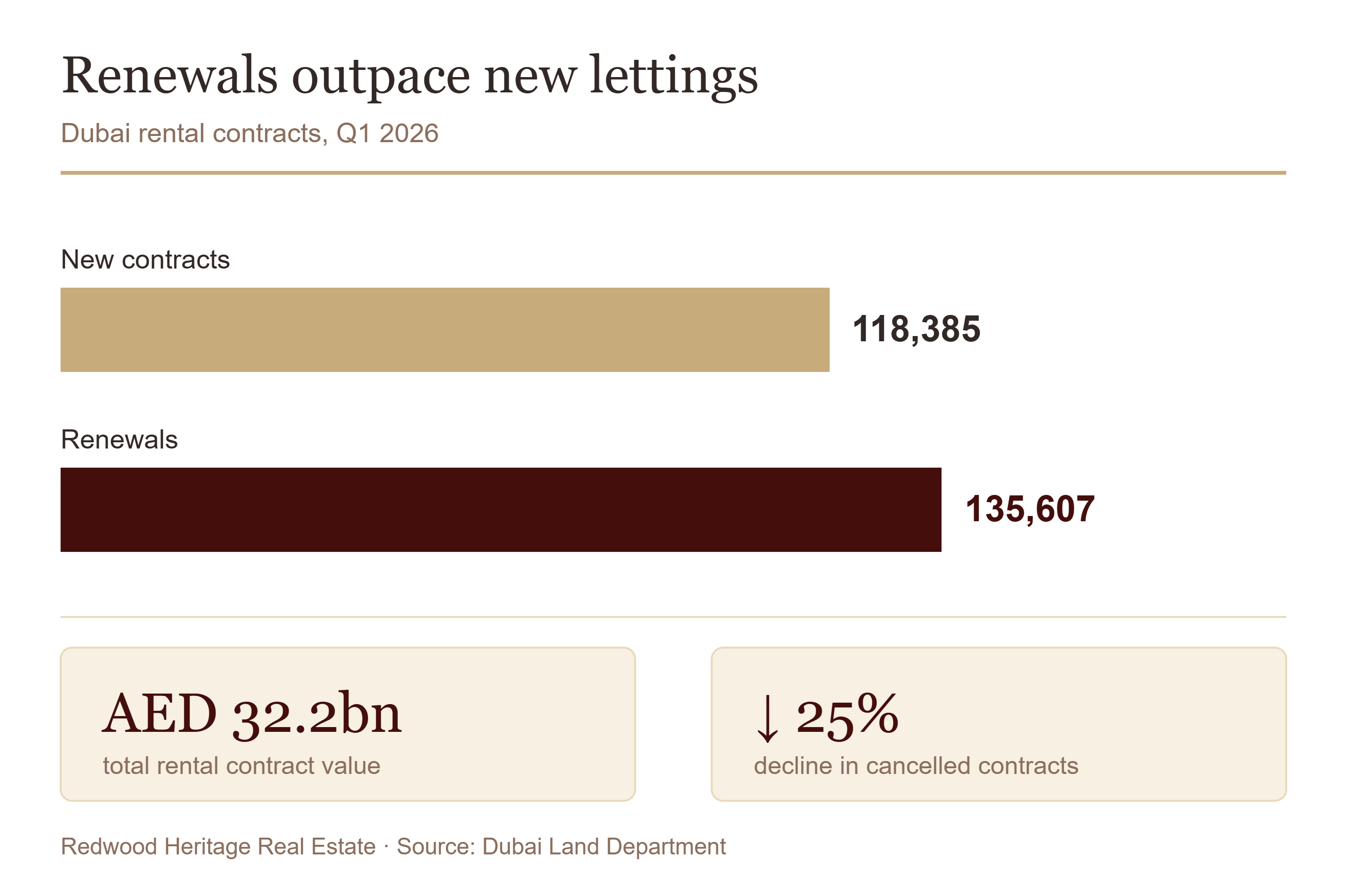
The scale is considerable. In the first quarter of 2026, rental contracts in Dubai reached AED 32.2 billion, comprising 118,385 new leases and 135,607 renewals. Early contract terminations fell by 25 per cent, an indication that more tenants are choosing to stay.
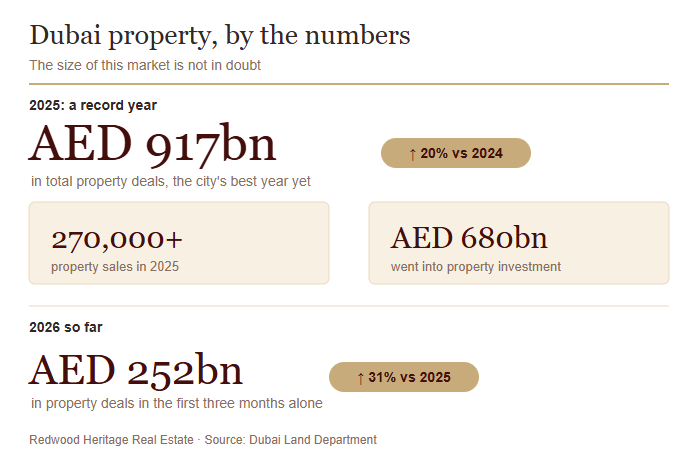
The wider market is equally robust. In 2025, Dubai recorded more than AED 917 billion in property transactions across over 270,000 sales, an increase of 20 per cent on the previous year. Including leases and related services, total activity reached 3.11 million transactions, and real estate investment exceeded AED 680 billion across 258,600 deals. Momentum carried into 2026: AED 252 billion of transactions in the first quarter, up 31 per cent year on year, of which AED 173 billion was investment, with the investor base rising to 48,448, including 29,312 first-time investors.
These are substantial figures, yet Dubai’s scale has never been in question. The more relevant test is whether the market can retain residents once they arrive.
The value lies in flexibility
Monthly payment does not reduce the rent, which remains exactly the same. What changes is the ease of commitment. Tenants no longer need to raise a large sum at the outset. Landlords gain access to a wider pool of qualified tenants, so units let faster and remain occupied. For investors, it supports a more complete way of assessing a property: by the rent it commands, and equally by tenant retention, payment discipline and resident satisfaction.
A vacant unit earns nothing. Flexible payment keeps it let, at the same rent.
The point deserves emphasis. Every month a property stands empty is a cost to its owner, while a property let on a flexible schedule continues to earn at an identical rent. A rental market is ultimately as strong as the contracts that endure and the residents who feel secure enough to remain.
Activity and strength are different measures
An active market is not necessarily a strong one. Strength rests on sound regulation, reliable information, good service and tenants who remain through the cycle. Flexi Rent belongs to that agenda and is the latest step in a direction Dubai has pursued for some time.
In 2025, Dubai introduced the Smart Rental Index, which applies data analysis and a building by building rating system to determine fair rents and limit arbitrary increases. In the same year, the city reported more than 900,000 rental contracts for 2024, up 8 per cent. Taken together, the Smart Rental Index and Flexi Rent point to a rental market that is fairer, simpler to transact in and considerably easier for serious investors to analyse.
Markets gain strength when residents stay. Transaction counts alone say little.
We have long held that a market should be judged by its resilience in difficult conditions rather than by its figures in a strong year. These reforms are an effort to build that resilience in advance, before any correction arrives.
The test ahead
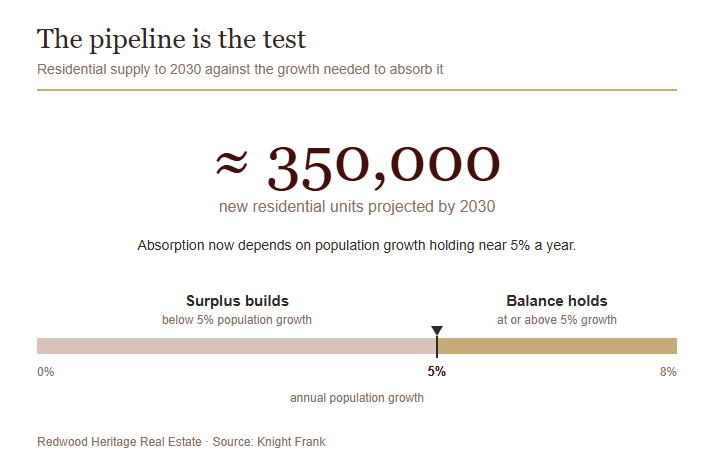
The timing matters, because substantial new supply is approaching. Knight Frank estimates that around 350,000 new homes could be delivered in Dubai by 2030. Absorbing them would require population growth of roughly 5 per cent a year. If that growth continues, the new stock will be occupied. If it slows, supply will exceed demand, and the beneficiaries will be well located properties, reputable landlords and a rental experience that makes commitment easy.
The risk lies in homes that no one has been given a reason to choose.
Flexible payment helps fill homes, match tenants to the right properties and sustain occupancy. It cannot compensate for a poorly located building or an indifferent landlord. Easier renting lifts the properties that already merit selection and leaves the rest exposed.
Conclusion
Redwood’s view is clear. A fairer and more accessible rental market is becoming part of Dubai’s investment case.
It benefits tenants and landlords alike, and above all it strengthens the market as a whole by making homes easier to occupy, rent easier to pay and tenant behaviour easier to monitor. A market that is easy to enter is worth more. A market residents choose not to leave is worth more still. The advantage will belong to those who make renting simpler, clearer and more personal while preserving the standards that define Dubai.
- Dubai Land Department, including the Smart Rental Index
- Knight Frank

