


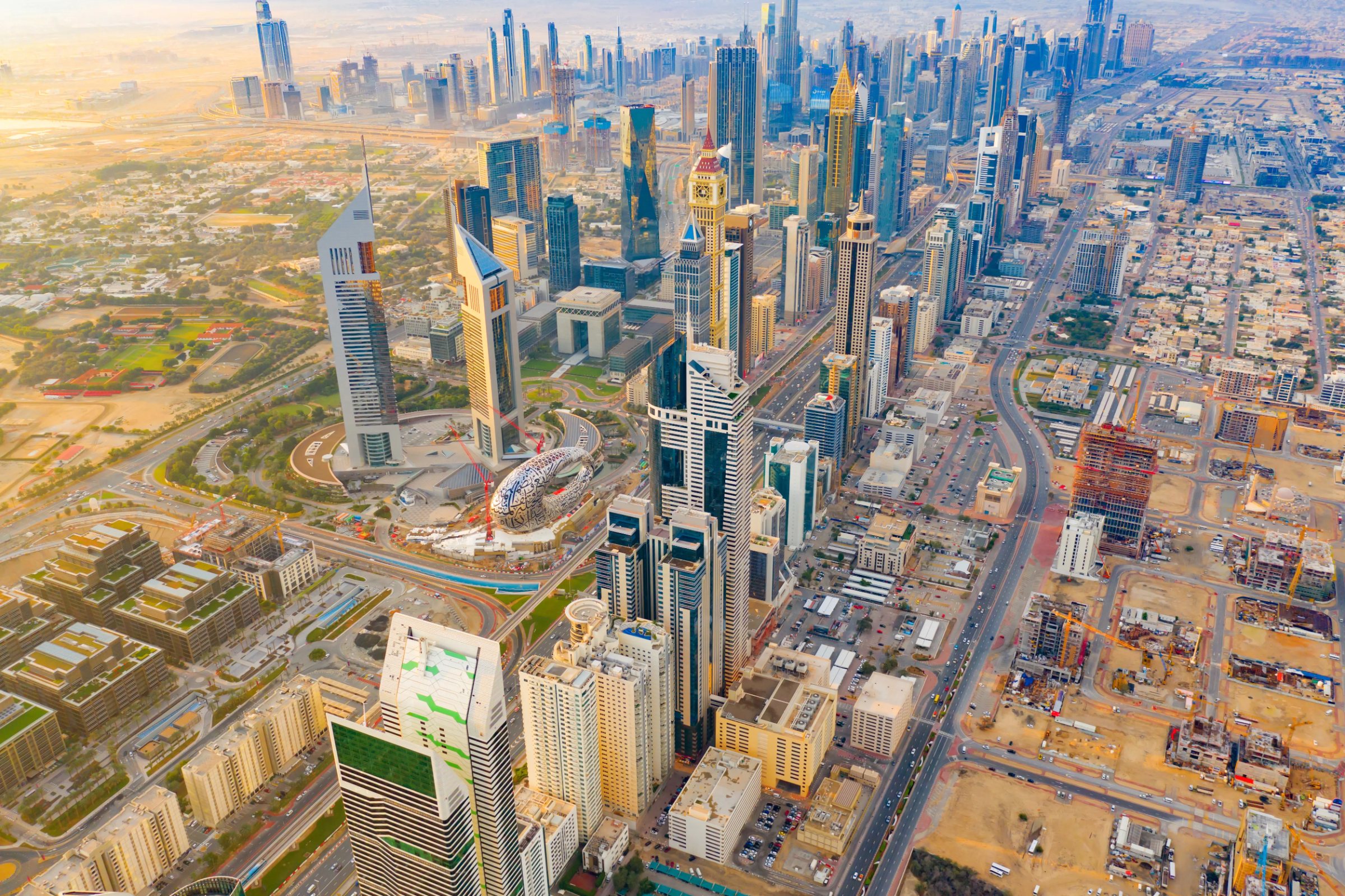
When investors consider Dubai’s next decade, they instinctively look to the coastline: Palm Jebel Ali, Dubai Islands, Jumeirah Bay. The most transformational shift in value, however, is taking place inland, in the district that already defines the region’s financial identity: DIFC.
For the first time since its creation, Dubai International Financial Centre is expanding its urban footprint and regulatory reach simultaneously, an expansion that will triple the size of the financial district and add 13 million square feet of new commercial, residential, retail, hotel, and innovation space.
The market now calls this evolution DIFC 2.0, a phrase that merges the official DIFC 2030 masterplan with the emerging residential and mixed-use expansion zone around DIFC Living, Gate Avenue, and the Trade Centre corridor.
The convergence matters. For investors with a long horizon, DIFC 2.0 is the deepest structural shift in the city’s central business district since 2004, and it will reprice the heart of Dubai for the next generation.

1. Understanding DIFC 2.0 In Its True Institutional Form
Officially, the DIFC 2030 masterplan sets out three parallel objectives. These are now backed by the most ambitious district expansion in Dubai’s history.
1. Expand Dubai’s global financial hub with new commercial towers, regulated space and institutional grade infrastructure.
2. Modernise Gate Avenue into a walkable, integrated urban spine connecting retail, offices and cultural venues.
3. Introduce targeted, high density residential stock within DIFC zoning, strategically placed to support the workforce of asset managers, private equity partners, fund administrators, legal partners and banks.
This is the true institutional core of DIFC 2.0. Around it sits the informal real-estate definition: the emerging residential corridor spanning:
- DIFC Living
- Trade Centre district
- Zabeel fringe
- SZR corridor towers
- New high-density plots allocated for mixed-use near Gate Avenue
While this area is not formally labelled “DIFC 2.0,” at Redwood Heritage we recognise its strategic alignment with the financial centre and its role in absorbing demand.
The two zones, the official expansion and the residential spillover, will rise together, and that duality is where the investor opportunity lies.

2. Why DIFC 2.0 Has Institutional Gravity
The world is reorganising around incentives, certainty, and regulatory predictability. DIFC sits at that intersection.
Three forces are driving demand:
A. HNW and UHNW Migration Continues
Dubai receives a disproportionate share of global wealth migration because it combines zero income tax, legal certainty, currency neutrality, global banking and lifestyle infrastructure. DIFC is the administrative headquarters of this influx, where mandates are signed, funds are domiciled and advisory begins.
B. Institutional Capital is Localising
Hedge funds, private credit platforms, venture firms and family offices are relocating or adding Dubai as a second hub. Every additional GP, LP or CIO entering the region increases demand for both office space and high grade residential nearby.
C. Scarcity at the Core
DIFC has almost no land left. DIFC 2.0 is a precision extension rather than sprawl, which means supply is likely to lag demand.
This is the opposite of large coastal masterplans with extensive shoreline plots. DIFC is landlocked, regulated and finite, which makes it one of the purest scarcity assets in the Middle East.
3. Pricing Dynamics: The Repricing of Centrality
Today, DIFC’s prime residential stock trades between AED 3,500 and 6,000 per sq ft, depending on tower and floor plate. As DIFC Living and adjacent towers enter the market, the pricing curve is tightening:
- Launch prices for DIFC Living have set a new benchmark for district residential.
- Secondary stock is repricing upwards as demand centres around walkability, design, and regulatory adjacency.
- Future commercial supply will elevate corporate demand, indirectly supporting residential absorption.
More importantly, DIFC 2.0 has a unique uplift driver: functional density. The district is becoming more walkable, more vertical, and more connected; a rare characteristic in Dubai’s decentralised urban layout.
This is why DIFC’s risk adjusted appreciation potential compares favourably with other central zones. Investors are paying for institutional proximity rather than view premiums.

4. The DIFC 2.0 Residential Corridor: Mapping the Next Appreciation Zone
Beyond the DIFC gates, the market categorises the surrounding masterplan as “DIFC 2.0”. This includes:
- New mixed-use towers
- High-density development corridors
- Projects aligned with the DIFC Living style of architecture
- Zabeel and Trade Centre plots intended to create a residential belt
This belt is strategically poised for uplift because:
- It absorbs institutional demand overflow from the core DIFC zone.
- It offers slightly more accessible price points, expanding the investor base.
- It will benefit from DIFC’s long-term urban improvements without being restricted by DIFC zoning densities.
In European financial hubs, this model is proven. Zurich West, Canary Wharf’s outer ring, and Singapore’s Tanjong Pagar followed the same trajectory: the periphery grew fastest after the core became saturated.
At Redwood Heritage, we believe Dubai will follow the same pattern, and faster, because the migration wave is stronger.
5. Who Should Be Buying DIFC 2.0 and Why
The DIFC 2.0 thesis fits investors with three characteristics:
A. Long term wealth positioning (5 to 10 year hold)
These are investors seeking to own a scarcity asset in the financial capital of the Middle East, rather than traders.
B. Income + appreciation logic
DIFC 2.0 offers two layers of return:
- Rising rental yields from corporate executives and fund professionals
- Capital appreciation driven by structural scarcity
C. Portfolio balance
For Swiss, French, UK, German and GCC investors, DIFC 2.0 can serve as the defensive anchor of a Dubai allocation: stable, global and counter-cyclical.
This is why global families and financial firms are positioning early. The opportunity lies in owning the institutional core before it becomes institutionally priced.

6. The Redwood Heritage Thesis: Where the Early Advantage Lies
Our investment logic is straightforward: markets tend to reprice the centre last, and then they reprice it decisively.
We see DIFC 2.0 developing across three investable layers:
Layer 1: Inside DIFC Proper
Ultra scarce and typically under-allocated. These assets will attract institutions, family offices and regional allocators.
Layer 2: The DIFC Living Belt
The emerging mixed-use corridor will act as DIFC’s residential extension and may deliver the strongest medium term appreciation, because pricing starts lower but follows DIFC’s trajectory.
Layer 3: Corporate-adjacent residential
High grade stock within a 5 to 10 minute walk of Gate Avenue is likely to see outsized rental demand from fund managers, counsel and bankers.
Across all three layers, the uplift is structural:
- Limited land
- Concentrated capital flows
- Regulatory moat
- Walkability
- Institutional magnetism
- Workforce densification
- Global migration funneling into a finite core
DIFC 2.0 is, by design, the most supply-constrained central business district in the MENA Region.
That is the source of the early advantage.

7. How Redwood Heritage Structures DIFC 2.0 Acquisitions for Clients
Our approach to DIFC 2.0 is built around precision and alignment:
- Exclusive Mandates to centralise negotiation
- Open-architecture access to all developers, third-party inventories, and off-market stock
- Data-driven valuation models built on comparable scarcity markets
- Institution-first negotiation logic, approached as an investment committee would
- Long-term structuring for families seeking multi-jurisdiction portability
Because DIFC 2.0 is fundamentally an institutional district, clients need an institutional strategy rather than transactional behaviour.
8. Redwood Heritage Capital Signal: The Final Take
DIFC 2.0 is a redefinition of Dubai’s central district rather than a new district.
For global investors, this is among the most compelling real estate stories in inland Dubai:
- A financial hub expanding at the same moment global capital relocates
- A landlocked district with finite supply
- A demographic wave of fund managers, partners, founders, lawyers, and executives needing to live close to the centre
- A dual-layer uplift: the regulated core and the residential belt
- And a structural shortage of walkable, high-grade residential property
For long term investors who understand the relationship between scarcity and financial gravity, the case for DIFC 2.0 is clear.
This is the centre of gravity for the next decade of capital in Dubai, and Redwood Heritage Real Estate is positioned at its heart.
From our base in Dubai, we serve investors who see real estate as an instrument of permanence rather than a transaction. If that reflects your philosophy, we invite you to begin a private dialogue with Redwood Heritage.
To explore a tailored investment approach, contact your Redwood advisor: re.redwoodheritage.com

