


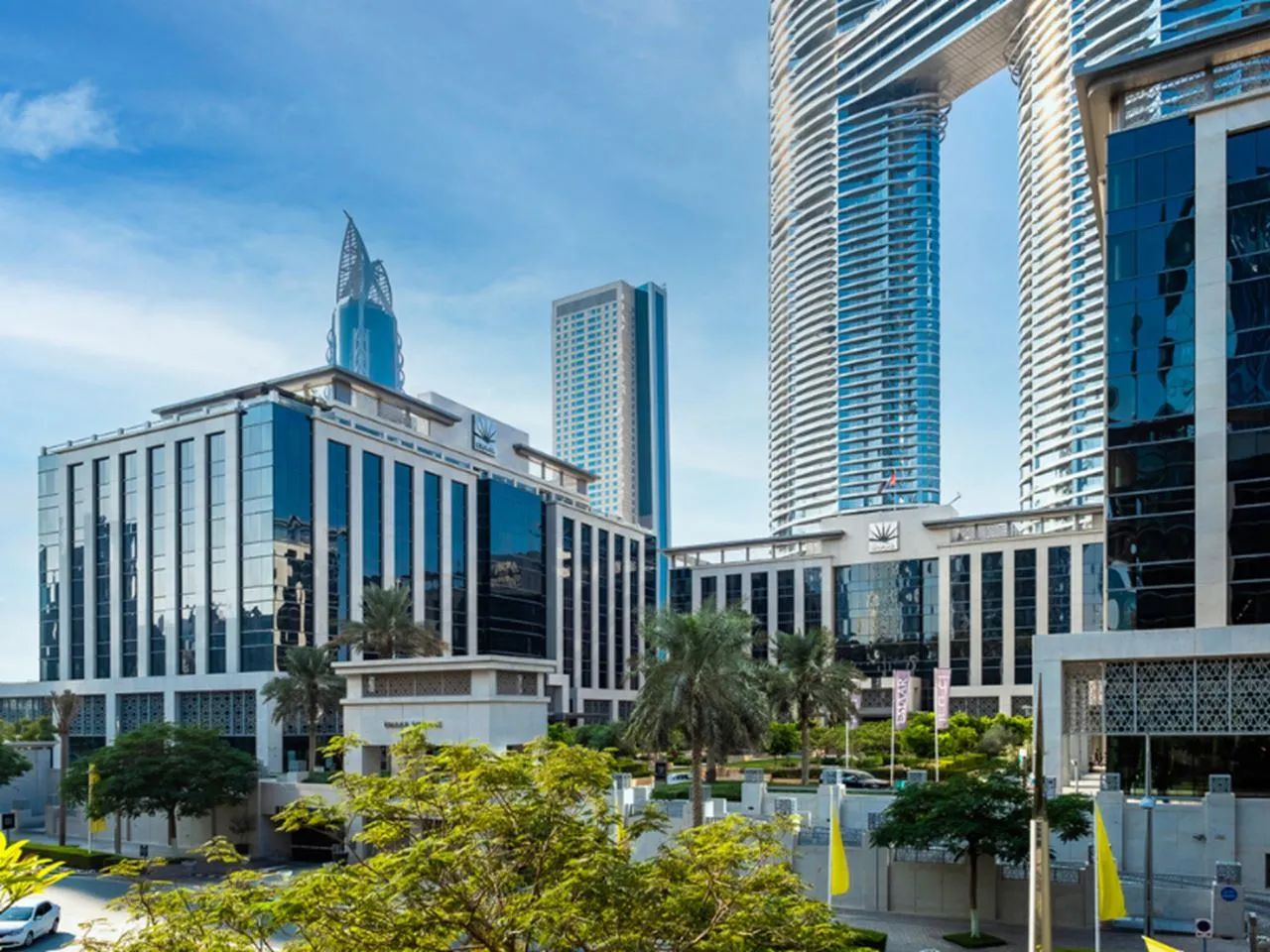
Dubai’s commercial office sector stands at the intersection of scarcity and strategic growth. In a market increasingly defined by its global relevance, investor confidence, and population inflows, the commercial real estate narrative is no longer one of speculation—it is one of precision.
Grade A at Capacity: Excellence is Now Fully Occupied
Grade A office assets across Dubai—particularly within global financial precincts such as DIFC, Downtown, and Dubai Hills Business Park—have now reached historically low vacancy levels. In some cases, as reported, vacancy in core locations has dropped below 0.5%, with waiting lists forming for premium, well-managed office space.
These are not temporary anomalies. They are structural indicators of a maturing market.
The depth of demand reflects the nature of Dubai’s repositioning: from a regional hub to a global city, attracting financial institutions, asset managers, tech firms, and sovereign capital. Businesses are not simply leasing space—they are embedding themselves into the economic architecture of the city.
Tightening in Grade B & C: The Flight to Quality Reshapes the Landscape
As Grade A space becomes absorbed, Grade B and C buildings are quietly being repositioned and re-evaluated. Vacancy in these segments continues to decline, driven by mid-tier occupiers upgrading their work environments in line with evolving workforce expectations and international best practices.
In districts like Business Bay, Sheikh Zayed Road, and Tecom, absorption rates are accelerating—particularly for buildings with strong facility management, sound access, and adaptive floor plates.
This suggests a broader market shift: even mid-market tenants are now seeking quality, stability, and long-term tenancy security—a trend that favours buildings with professional, centralised ownership models.
A Market Without Enough Single-Owner Office Buildings
Despite this momentum, one structural truth remains: Dubai has a profound scarcity of single-ownership commercial buildings.
The majority of the city’s office inventory was built under strata-title schemes, with multiple owners holding individual floors or units. This fragmentation presents operational challenges—from inconsistent maintenance to a lack of cohesive leasing strategy—and often deters institutional tenants seeking long-term certainty.
Fully-owned commercial buildings are the exception, not the norm.
And herein lies the opportunity:
Investors able to secure entirely owned office assets—particularly in freehold or long-leasehold zones—will hold a distinct competitive edge. These buildings are easier to lease, command higher rents, and appreciate more predictably over time due to their institutional appeal.
The Demand Drivers: Long-Term, Enduring, Unfolding
Behind the headlines lies a deeper, more strategic shift. Dubai’s commercial demand is not speculative—it is demographic and structural.
- Population Growth: Dubai’s population is projected to reach 5.8 million by 2040, up from approximately 3.6 million today. This population increase will not be driven solely by low-income migration, but by professionals, executives, and global talent. These individuals fuel demand for quality workspace and enterprise-grade infrastructure.
- Residential Development: As branded residences, villa communities, and urban masterplans expand, the surrounding demand for commercial space naturally follows. Office, retail, F&B and business services all become interdependent.
- Business Relocation: Dubai is no longer an outpost—it is headquarters. Family offices, private banks, fintechs, and multinational corporates are selecting Dubai not just for lifestyle, but for tax efficiency, regulatory clarity, and sovereign neutrality.
All three dynamics are converging. Office demand is rising—not in cycles, but in a long arc.
Legacy Strategy: Owning What Cannot Be Replicated
For Redwood Heritage clients—families, private investors, and sovereign-aligned capital—the acquisition of a single-owner commercial asset is not a play for yield alone.
It is a legacy strategy:
- A hedge against inflation
- A vehicle for intergenerational wealth
- A portfolio anchor in a market of rising global significance
In a landscape where exceptional residential properties can still be replaced, a fully-owned, income-generating office tower in a strategic location is virtually irreplicable.
Few are built. Fewer are traded. Those who hold them, seldom let them go.
Final Thought: What Dubai Offers is Time-Proven Rarity
The alignment of population, infrastructure, and enterprise in Dubai creates a rare proposition: commercial real estate that grows in both purpose and prestige.
Investing in a single-owner commercial building today is more than a tactical acquisition—it is an act of foresight. One that positions investors not only for yield, but for influence and permanence in the heart of a city shaping the region’s future.

